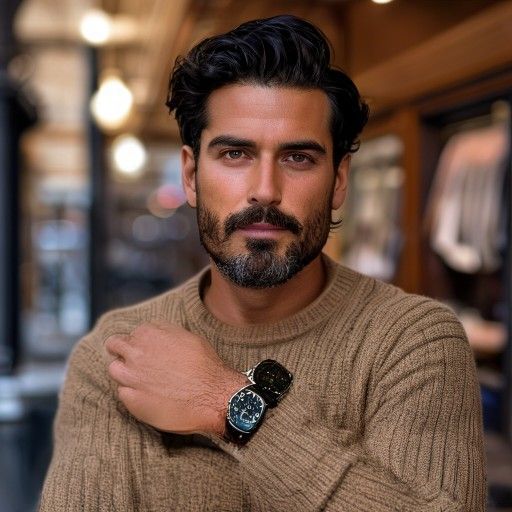
The Citizen evolution timeline spans from 1930 to today, marking a transformation from a Tokyo-based manufacturer into one of the world's most influential watchmaking brands through technological breakthroughs, precision engineering, and a commitment to affordable quality.
1930–1960: Founding and Domestic Dominance
Birth of a National Champion
Citizen was founded in 1930 in Tokyo when Shokosha Watch Research Institute rebranded as Citizen Watch Company, a name chosen to reflect the company's mission to create watches "for every citizen." This founding philosophy became the cornerstone of the brand's identity. By the late 1930s, Citizen had established itself as Japan's leading watchmaker, pioneering precision standards that rivaled Swiss manufacturers despite Japan's limited horological infrastructure at the time.
The company introduced the Caliber 0 in 1939, a movement that set new benchmarks for Japanese accuracy and became the foundation for post-war export success. During the 1950s, Citizen expanded domestically while quietly building technical capabilities that would challenge Western dominance in the global market.
Post-War Recovery and Export Ambitions
Following World War II, Citizen restructured aggressively. By 1956, the brand had achieved the milestone of producing 100,000 watches annually—a significant volume that demonstrated manufacturing maturity. The company invested heavily in automation and quality control, positioning itself for international expansion. Unlike many European brands that relied on craft tradition, Citizen built competitive advantage through precision manufacturing and scalability, a distinctly Japanese approach that would define the brand's character.
1960–1985: Global Breakthrough and Quartz Revolution
The Quartz Shock and Digital Innovation
Citizen's most pivotal moment came with the quartz revolution of the 1960s–70s. While Swiss manufacturers initially dismissed quartz technology as a threat, Citizen embraced it wholeheartedly. The brand launched the Citizen Quartz in 1969, one of the first commercial quartz watches, and followed with the Citizen 67-9011, a thin quartz chronograph in 1976 that demonstrated mastery over complex quartz complications.
This period established Citizen as a technological innovator willing to cannibalize mechanical traditions for market relevance—a pragmatic stance that Japanese manufacturers adopted while Swiss houses hesitated. By 1980, Citizen controlled nearly 15% of the global quartz market and had become a household name across Asia, Europe, and North America.
Design Evolution and Brand Positioning
During the 1970s and early 1980s, Citizen's design language shifted from functional minimalism to sporty elegance. Models like the Citizen Chronograph series introduced rotating bezels, integrated bracelets, and dial designs that appealed to both professionals and casual collectors. The brand occupied a unique market position—above fashion watches but below luxury Swiss equivalents—that proved remarkably durable through decades of economic shifts.
1985–2005: Eco-Drive Disruption and Market Repositioning
The Solar Revolution
In 1995, Citizen introduced Eco-Drive, solar-powered movement technology that fundamentally altered watchmaking economics. Unlike previous solar watches that required frequent battery changes, Eco-Drive could store energy in a rechargeable cell indefinitely, combining sustainability with reliability. This innovation did more than solve a technical problem; it repositioned Citizen as an environmental leader and created a functional advantage competitors struggled to match.
The Citizen Eco-Drive Sapphire launched in 1998 became a flagship model, incorporating sapphire crystals and titanium cases with solar powering. By 2005, Eco-Drive had been integrated across price tiers, from entry-level to premium segments, becoming Citizen's defining technological signature. This was shrewd brand architecture: one innovation that justified premium positioning while remaining accessible to mass-market customers.
Precision Timepiece Division
Simultaneously, Citizen created a separate division for mechanical and high-complication watches, signaling respect for traditional horological values while the parent brand dominated quartz markets. This bifurcation allowed Citizen to compete against A. Lange & Söhne and other mechanical specialists in niche segments without diluting mass-market brand identity.
2005–Present: Mechanical Renaissance and Market Expansion
Return to Mechanical Excellence
Beginning in 2005, Citizen began reintegrating mechanical watchmaking into its core strategy. The acquisition of watch manufacture expertise and investment in in-house caliber development reflected confidence in mechanical horology's enduring appeal. Unlike Japanese competitors who had abandoned mechanical production entirely, Citizen recognized that collectors valued transparency, craftsmanship, and mechanical complexity—qualities that coexist with technological innovation.
Models introduced after 2010 demonstrated genuine mechanical ambition: chronographs with hand-wound movements, annual calendars, and GMT complications developed entirely in-house. Citizen proved that Japanese manufacturing excellence applied to mechanical watches with the same rigor as quartz precision.
Digital Integration and Hybrid Systems
In recent years, Citizen has experimented with hybrid analog-digital displays and smartwatch-adjacent complications, though these remain niche explorations rather than core strategy. The brand's focus remains on Eco-Drive solar technology across multiple price tiers, digital quartz chronographs for professionals, and limited mechanical releases for collectors.
The Citizen Promaster line, launched in expanded form during the 2010s, represents the brand's contemporary identity: robust field watches combining solar power, titanium construction, and diver certifications for serious users rather than fashion consumers. This positioning—professional-grade, technically sophisticated, affordable—directly reflects Citizen's founding mission reimagined for modern markets.
Looking Forward
Citizen's evolution from precision manufacturer to solar technology pioneer to hybrid mechanical innovator reveals a brand comfortable with reinvention while maintaining consistent core values: quality accessible to working professionals, investment in manufacturing capability rather than heritage marketing, and technical solutions that create genuine advantages. As sustainability becomes central to luxury positioning, Citizen's 30-year commitment to Eco-Drive may prove prescient, especially as younger collectors increasingly question mechanical watchmaking's environmental costs.